



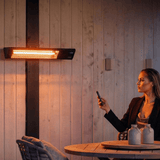




Heaters for covered patios
A heater for a covered patio is designed for anyone who wants to enjoy real warmth under their patio cover or veranda, without the hassle of temporary solutions. This collection mainly features powerful electric models suitable for fixed wall or ceiling installation, as well as more flexible setups. Not sure whether to choose 2000W, 2500W or 3000W, or which model is right for your space? Take the selection guide below.


Original price
€229,95
Original price
€229,95
-
Original price
€229,95
Original price
€229,95
Current price
€199,95
€199,95
-
€199,95
Current price
€199,95
Heatix Smart Golden Shadow Heater 3000W
- Lighting experience: low light
- 20–30 m²
- 9 settings
Original price
€229,95
Original price
€229,95
-
Original price
€229,95
Original price
€229,95
Current price
€199,95
€199,95
-
€199,95
Current price
€199,95
Save €30,00


Original price
€219,95
Original price
€219,95
-
Original price
€219,95
Original price
€219,95
Current price
€179,95
€179,95
-
€179,95
Current price
€179,95
Heatix Smart Golden Shadow Heater 2500W
- Lighting experience: low light
- 15–25 m²
- 9 settings
Original price
€219,95
Original price
€219,95
-
Original price
€219,95
Original price
€219,95
Current price
€179,95
€179,95
-
€179,95
Current price
€179,95
Save €40,00


Original price
€219,95
Original price
€219,95
-
Original price
€219,95
Original price
€219,95
Current price
€175,95
€175,95
-
€175,95
Current price
€175,95
Heatix Smart Carbon Fiber Heater 3000W
- Lighting experience: Warm, atmospheric light
- 20–30 m²
- 9 settings
Original price
€219,95
Original price
€219,95
-
Original price
€219,95
Original price
€219,95
Current price
€175,95
€175,95
-
€175,95
Current price
€175,95
Save €44,00


Original price
€209,95
Original price
€209,95
-
Original price
€209,95
Original price
€209,95
Current price
€155,95
€155,95
-
€155,95
Current price
€155,95
Heatix Smart Carbon Fiber Heater 2500W
- Lighting experience: Warm, atmospheric light
- 15–25 m²
- 9 settings
Original price
€209,95
Original price
€209,95
-
Original price
€209,95
Original price
€209,95
Current price
€155,95
€155,95
-
€155,95
Current price
€155,95
Save €54,00


Original price
€189,95
-
Original price
€189,95
Original price
€189,95
€189,95
€189,95
-
€189,95
Current price
€189,95
Eurom Golden 2500 Shadow patio heater
- Light output: Low
- 15–25 m²
- 2 settings
Original price
€189,95
-
Original price
€189,95
Original price
€189,95
€189,95
€189,95
-
€189,95
Current price
€189,95
Sold out


Original price
€209,95
Original price
€209,95
-
Original price
€209,95
Original price
€209,95
Current price
€169,95
€169,95
-
€169,95
Current price
€169,95
Heatix Smart Golden Shadow Heater 2000W
- Lighting experience: low light
- 10–20 m²
- 9 settings
Original price
€209,95
Original price
€209,95
-
Original price
€209,95
Original price
€209,95
Current price
€169,95
€169,95
-
€169,95
Current price
€169,95
Save €40,00

Original price
€179,95
-
Original price
€179,95
Original price
€179,95
€179,95
€179,95
-
€179,95
Current price
€179,95
Eurom Golden 2000 Shadow patio heater
- Light output: Low
- 10–20 m²
- 2 settings
Original price
€179,95
-
Original price
€179,95
Original price
€179,95
€179,95
€179,95
-
€179,95
Current price
€179,95


Original price
€145,95
Original price
€145,95
-
Original price
€145,95
Original price
€145,95
Current price
€109,95
€109,95
-
€109,95
Current price
€109,95
Hanging heater 1500W - Heatix Patio heater
- Lighting experience: Warm, atmospheric light
- Coverage: 12–14 m²
- 3 settings
Original price
€145,95
Original price
€145,95
-
Original price
€145,95
Original price
€145,95
Current price
€109,95
€109,95
-
€109,95
Current price
€109,95
Save €36,00


Original price
€199,95
Original price
€199,95
-
Original price
€199,95
Original price
€199,95
Current price
€150,95
€150,95
-
€150,95
Current price
€150,95
Heatix Smart Carbon Fiber Heater 2000W
- Lighting experience: Warm, atmospheric light
- 10–20 m²
- 9 settings
Original price
€199,95
Original price
€199,95
-
Original price
€199,95
Original price
€199,95
Current price
€150,95
€150,95
-
€150,95
Current price
€150,95
Save €49,00


Original price
€169,95
-
Original price
€169,95
Original price
€169,95
€169,95
€169,95
-
€169,95
Current price
€169,95
Eurom Golden 1500 Shadow patio heater
- Light output: Low
- Coverage: 14–17 m²
- 2 settings
Original price
€169,95
-
Original price
€169,95
Original price
€169,95
€169,95
€169,95
-
€169,95
Current price
€169,95


Original price
€199,95
Original price
€199,95
-
Original price
€199,95
Original price
€199,95
Current price
€149,95
€149,95
-
€149,95
Current price
€149,95
Heatix Carbon Rose Gold Heater 2500W
- Lighting experience: low light
- 15–25 m²
- 3 settings
Original price
€199,95
Original price
€199,95
-
Original price
€199,95
Original price
€199,95
Current price
€149,95
€149,95
-
€149,95
Current price
€149,95
Sold out

Original price
€179,95
Original price
€179,95
-
Original price
€179,95
Original price
€179,95
Current price
€119,95
€119,95
-
€119,95
Current price
€119,95
Heatix Carbon Rose Gold Heater 1500W
- Lighting experience: low light
- 5–15 m²
- 3 settings
Original price
€179,95
Original price
€179,95
-
Original price
€179,95
Original price
€179,95
Current price
€119,95
€119,95
-
€119,95
Current price
€119,95
Sold out

Original price
€189,95
Original price
€189,95
-
Original price
€189,95
Original price
€189,95
Current price
€129,95
€129,95
-
€129,95
Current price
€129,95
Heatix Carbon Rose Gold Heater 2000W
- Lighting experience: low light
- 10–20 m²
- 3 settings
Original price
€189,95
Original price
€189,95
-
Original price
€189,95
Original price
€189,95
Current price
€129,95
€129,95
-
€129,95
Current price
€129,95
Save €60,00


Original price
€165,95
Original price
€165,95
-
Original price
€165,95
Original price
€165,95
Current price
€129,95
€129,95
-
€129,95
Current price
€129,95
Hanging Patio Heater with LED Lighting 2100W
- Lighting experience: Warm, atmospheric light
- 10–20 m²
- 3 settings
Original price
€165,95
Original price
€165,95
-
Original price
€165,95
Original price
€165,95
Current price
€129,95
€129,95
-
€129,95
Current price
€129,95
Save €36,00


Original price
€274,95
-
Original price
€294,95
Original price
€274,95
-
Original price
€294,95
Original price
€274,95
€219,95
-
€235,95
€219,95
-
€235,95
Current price
€219,95
Heatix Freestanding Smart Carbon Fiber Heater (2000W / 2500W)
- Lighting experience: Warm, atmospheric light
- 9 settings
Original price
€274,95
-
Original price
€294,95
Original price
€274,95
-
Original price
€294,95
Original price
€274,95
€219,95
-
€235,95
€219,95
-
€235,95
Current price
€219,95
Save up to €59,00


Original price
€294,95
-
Original price
€304,90
Original price
€294,95
-
Original price
€304,90
Original price
€294,95
€239,95
-
€249,95
€239,95
-
€249,95
Current price
€239,95
Heatix Freestanding Smart Golden Shadow Heater (2000W / 2500W)
- Lighting experience: low light
- 9 settings
Original price
€294,95
-
Original price
€304,90
Original price
€294,95
-
Original price
€304,90
Original price
€294,95
€239,95
-
€249,95
€239,95
-
€249,95
Current price
€239,95
Save up to €55,00


Original price
€219,00
Original price
€219,00
-
Original price
€219,00
Original price
€219,00
Current price
€208,05
€208,05
-
€208,05
Current price
€208,05
Compact Artix Bright Hanging Black 1500 Watt
- Light intensity: High
- Coverage: 12–14 m²
- 3 settings
Original price
€219,00
Original price
€219,00
-
Original price
€219,00
Original price
€219,00
Current price
€208,05
€208,05
-
€208,05
Current price
€208,05
Save €10,95


Original price
€274,95
Original price
€274,95
-
Original price
€274,95
Original price
€274,95
Current price
€219,95
€219,95
-
€219,95
Current price
€219,95
Heatix Freestanding Carbon Rose Gold Heater 2000 W
- Lighting experience: low light
- 3 settings
Original price
€274,95
Original price
€274,95
-
Original price
€274,95
Original price
€274,95
Current price
€219,95
€219,95
-
€219,95
Current price
€219,95
Save €55,00


Original price
€159,00
Original price
€159,00
-
Original price
€159,00
Original price
€159,00
Current price
€151,05
€151,05
-
€151,05
Current price
€151,05
Indus Bright Hanging Black 2100 Watt
- Light intensity: High
- 10–20 m²
- 3 settings
Original price
€159,00
Original price
€159,00
-
Original price
€159,00
Original price
€159,00
Current price
€151,05
€151,05
-
€151,05
Current price
€151,05
Sold out


Original price
€126,00
Original price
€126,00
-
Original price
€126,00
Original price
€126,00
Current price
€119,70
€119,70
-
€119,70
Current price
€119,70
Elektra Quartz Freestanding Black 2000 Watt
- Light intensity: High
- 10–20 m²
- 3 settings
Original price
€126,00
Original price
€126,00
-
Original price
€126,00
Original price
€126,00
Current price
€119,70
€119,70
-
€119,70
Current price
€119,70
Sold out


Original price
€349,00
Original price
€349,00
-
Original price
€349,00
Original price
€349,00
Current price
€331,55
€331,55
-
€331,55
Current price
€331,55
Retro Bright Freestanding Black 2100 Watt
- Light intensity: High
- 10–20 m²
- 3 settings
Original price
€349,00
Original price
€349,00
-
Original price
€349,00
Original price
€349,00
Current price
€331,55
€331,55
-
€331,55
Current price
€331,55
Sold out


Original price
€243,90
Original price
€243,90
-
Original price
€243,90
Original price
€243,90
Current price
€199,90
€199,90
-
€199,90
Current price
€199,90
Heatix Smart Carbon Fiber Hanging Heater 3000W
- Lighting experience: Warm, atmospheric light
- 20–30 m²
- 9 settings
Original price
€243,90
Original price
€243,90
-
Original price
€243,90
Original price
€243,90
Current price
€199,90
€199,90
-
€199,90
Current price
€199,90
Save €44,00


Original price
€175,95
Original price
€175,95
-
Original price
€175,95
Original price
€175,95
Current price
€140,75
€140,75
-
€140,75
Current price
€140,75
Shade Hanging Patio Heater 2000W with LED - Heatix
- Plenty of light
- 8-18 m²
- 3 settings
Original price
€175,95
Original price
€175,95
-
Original price
€175,95
Original price
€175,95
Current price
€140,75
€140,75
-
€140,75
Current price
€140,75
Save €35,20


Original price
€279,00
Original price
€279,00
-
Original price
€279,00
Original price
€279,00
Current price
€265,05
€265,05
-
€265,05
Current price
€265,05
Indox Dark Tabletop Black 1200 Watt
- Light output: Low
- Coverage: 6–8 m²
- 2 settings
Original price
€279,00
Original price
€279,00
-
Original price
€279,00
Original price
€279,00
Current price
€265,05
€265,05
-
€265,05
Current price
€265,05
Save €13,95